
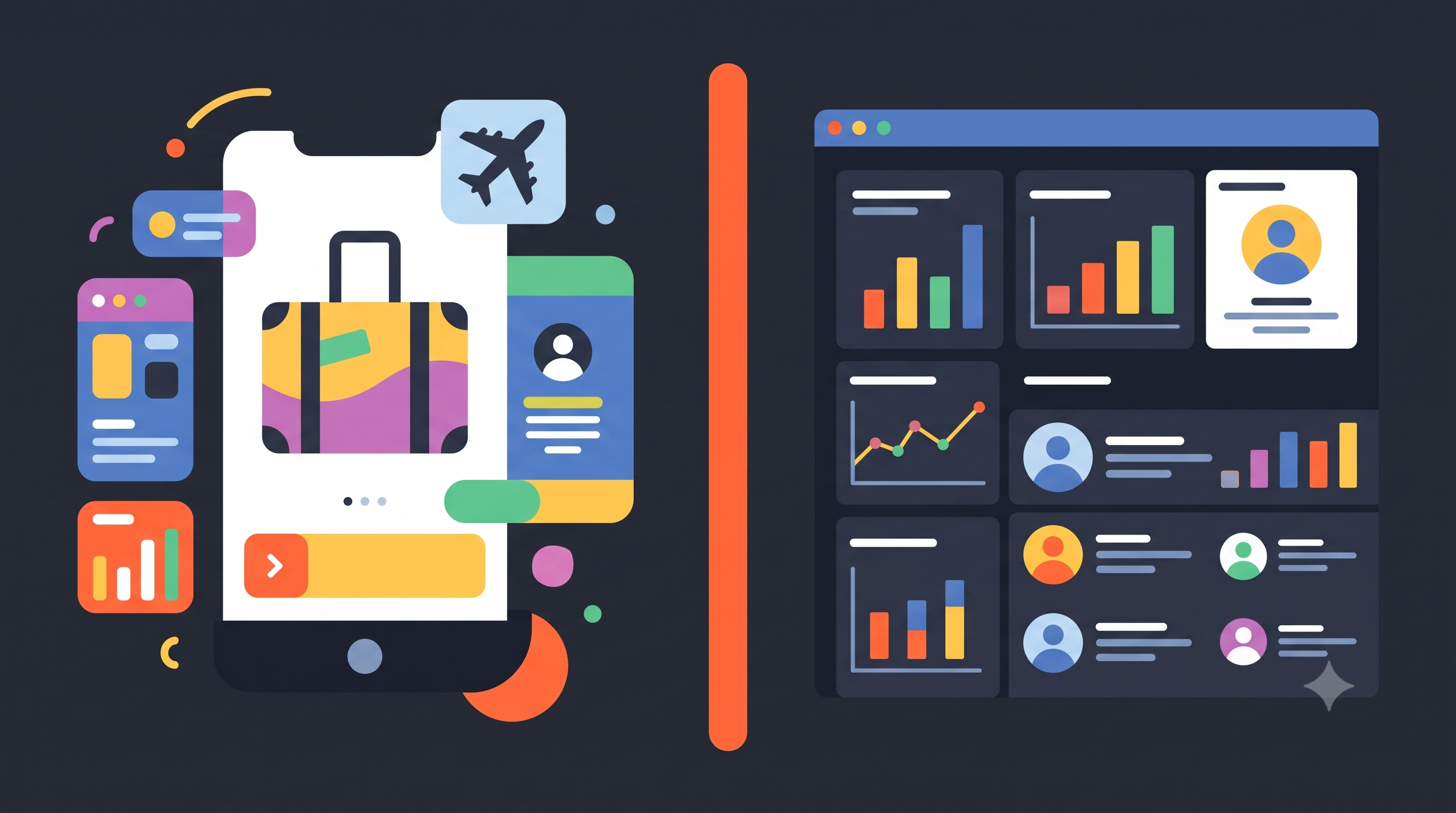
What Is a B2B Travel Portal?
B2B (Business-to-Business) travel portals are platforms designed for professional users such as travel agencies, tour operators, and corporate procurement teams. Prices are hidden from end consumers and displayed only to authorized users, with separate NET and GROSS price layers managed independently. B2B portals are equipped with sub-agency management, bulk booking APIs, and customizable markup tools.
What Is a B2C Travel Portal?
B2C (Business-to-Consumer) portals are booking engines developed for direct end users planning leisure travel. User experience (UX) and conversion optimization take center stage: fast search engines, comparison tools, dynamic package builders, and payment integrations form the backbone of the system. B2C portals present prices transparently, using promotions as primary customer acquisition tools.
Technical Infrastructure Differences
B2B systems require robust user and permission management, account-based credit and limit definitions, XML/API-based content distribution, and a multi-layer markup engine. B2C platforms prioritize search performance, mobile responsiveness, A/B testing infrastructure, and abandoned cart recovery workflows. GDS connections, hotel XML pools, and payment gateway integrations are common ground for both models.
Which Model Should You Choose?
If your target audience consists of regional agencies and corporate clients, a B2B-focused platform will deliver more sustainable growth. If you sell directly to end consumers, choose a conversion-rate-optimized B2C engine. Hybrid models combine both channels under a single platform, offering maximum flexibility.